
By Skyler Kociuba
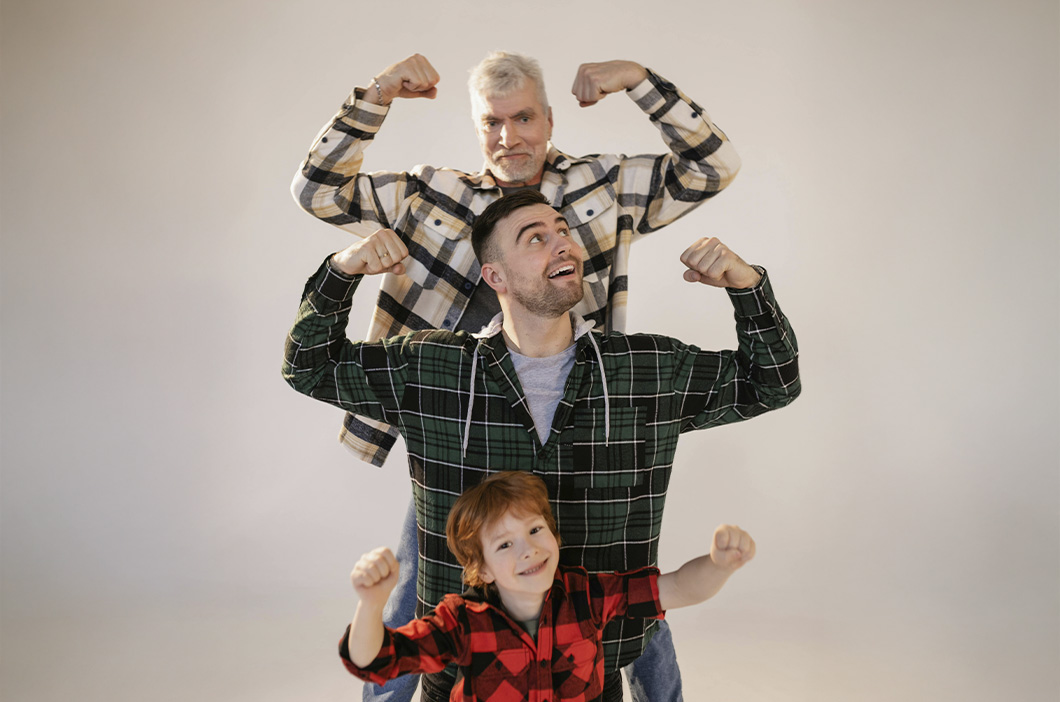
From birth, boys and men are shaped by masculinity culture that influences how they express emotions. These social expectations often discourage vulnerability, creating barriers that can last into adulthood. In this blog, we explore the common challenges men face and the skills and language that can help them build healthier relationships.
As children grow, they develop socially, experientially, and cognitively. Emotional awareness begins at birth, communicating emotions through facial expressions, crying, rubbing their eyes, or stretching their arms and legs. Even before they can speak, babies begin to recognize emotions and their meanings in different situations—this process, called social referencing, continues throughout our lives, even into adulthood.
Kohlberg’s Gender Identity Development Theory states that children begin by categorizing themselves as male or female with reinforcement from others in their lives, such as parents. They then feel rewarded by behaving in societally gender-consistent ways.
Examples of this type of reinforcement are:
- A little boy receiving a lot of praise for playing with construction toys
- A little girl receiving a lot of praise for taking care of a baby doll
As we grow older, we often continue on, conforming to these gender-specific norms, as they are societal in nature. While gender undoubtedly plays a positive role in many people’s formation of their identities, it is important to recognize the negative impact our words can have on the emotional development of the men in our lives.
How does this connect to men overcoming barriers to sharing feelings, you may ask? Well, let me tell you…
Understanding the Barriers Men Face in Expressing Emotions
Barriers to men expressing emotions can fall under, but are not limited to, two categories:
- Societal expectations
- Internalized fears
With societal norms and Kohlberg’s theory in mind, we can deduce that men and women are reinforced to engage with emotions in different ways.
For example, the repeated use of phrases such as “Man up!” “Stop acting like a girl!” and “Boys don’t cry” reinforce the idea that men are weak, overly sensitive, and do not deserve respect from other males if they express themselves in a way that may make them appear and/or feel vulnerable.
The opposite is true if we praise a boy for his “toughness” or lack of response to pain or sadness, with an “Atta boy!” or “You’re so tough! Like a REAL man!”.
Masculinity Culture and Social Expectations
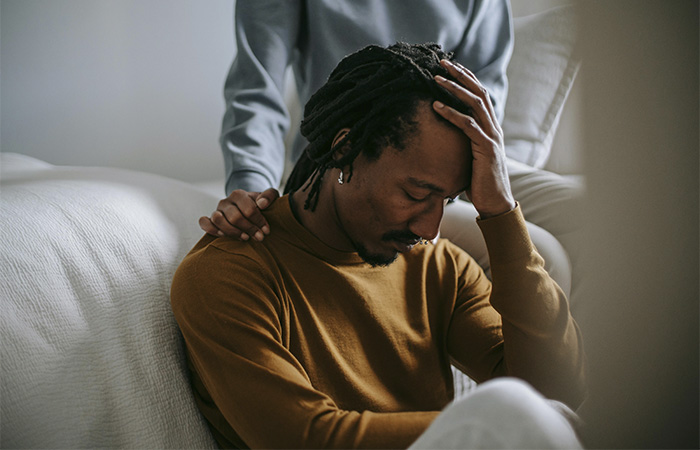
Masculinity is not only a fixed biological state, but also a set of social norms that create core expectations. Those core expectations, including stoicism, self-reliance, toughness, dominance, restricting emotions, and lack of vulnerability, form the basis of masculinity culture that men are often expected to conform to.
If a boy or man doesn’t live up to these expectations, the fear of social ridicule or emasculation becomes a prominent and eminent barrier to expressing emotions.
Normative male alexithymia describes how males are more likely to struggle with understanding, processing, or describing their emotions compared to females. A meta-analytic review states that “…girls are expected to display greater levels of most emotions than boys, particularly happiness and internalizing (or “intropunitive”) negative emotions, such as sadness, fear, anxiety, shame, and guilt (Brody & Hall, 2008).”
Additionally, “In contrast to the display rules for girls’ emotions, boys are generally expected to show less of these tender emotions, and they are allowed to express ‘externalizing’ emotions such as anger, contempt, and disgust more than girls” (Chaplin & Aldo, 2014).
With this in mind, we can fairly say that the barriers men face in expressing emotions can begin at birth, shaped by how parents and family treat them and the expectations they place on them. In other words, gender roles are determined and reinforced from a young age.
Building the Skills and Language Needed to Share Feelings
Building the skills and language needed to express emotions is especially important for men, who often grow up within a culture of masculinity that discourages emotional vulnerability.
Research on gender socialization consistently shows that boys and men receive fewer opportunities to practice emotional labeling. Additionally, they are frequently reinforced for emotional restriction—particularly around feelings like sadness, fear, or hurt.
Studies link this pattern, sometimes called restrictive emotionality, to higher rates of depression, anxiety, relational conflict, and distress.

How to Support Men’s Emotions
Helping men build emotional vocabulary—the ability to accurately name internal states—can improve emotional regulation, resilience, and interpersonal communication. The simple act of identifying emotions activates brain regions associated with calm and clarity, making emotional expression a scientifically supported tool for better mental health.
Developing emotional expression also requires building confidence and safety in communication. Research shows that men often benefit from structured, skills-based approaches such as cognitive-behavioral strategies, mindfulness, and emotionally focused work that teaches how to connect bodily sensations to emotional experiences.
Practicing language such as “I feel… when… because…” offers a predictable, low-pressure format for sharing feelings in relationships. Studies consistently find that when men learn to verbalize their inner experiences, relational satisfaction increases and conflict decreases. Through repeated practice in supportive environments—whether therapy, peer groups, or intimate partnerships—men can gradually unlearn restrictive norms, expand their emotional range, and build healthier, more connected relationships.
During moments of heightened emotion, communication can feel especially difficult for men because the stress response system (fight, flight, or freeze) reduces access to the parts of the brain responsible for language and reflective thinking. This neurobiological shift can make it harder to find the “right words,” increasing frustration or withdrawal.
Research shows that using grounding skills—such as slowing breathing, pausing before responding, or naming what is happening internally—helps deactivate this stress response and restore clarity. Men can also benefit from structured communication tools like “I-statements,” time-outs, and pacing language. For example, “I’m feeling overwhelmed and need a moment to gather my thoughts so I can respond calmly”.
Skills such as reflecting back what the other person is saying, sticking to one issue at a time, and using emotion words that match a physical sensation (“My chest is tight; I think I’m feeling anxious”) create a safer pathway for expressing vulnerability.
Practicing these habits outside of conflict—through journaling, therapy, or role-plays—helps men build muscle memory. This way, it makes it easier to stay connected, honest, and present even when emotions run high.

Creating Supportive Relationships That Encourage Openness
Men can foster supportive relationships that encourage emotional openness by intentionally surrounding themselves with people who value honesty, vulnerability, and mutual respect. This often begins with taking small risks—sharing a little more than usual, expressing needs directly, or opening up about stress—and noticing who responds with compassion, curiosity, or encouragement.
Research shows that emotional disclosure deepens trust and helps create “safe relationships,” where men feel less pressure to perform strength and more freedom to be authentic. Men can also strengthen emotional support systems by practicing active listening, checking in regularly with loved ones, and choosing friendships or partnerships that validate feelings with no judgment.
However, if emotions start to feel overwhelming, interfere with daily functioning, strain relationships, or feel too difficult to talk about even with supportive people, it may be a good time to start therapy.
Therapy provides a private, nonjudgmental space to practice emotional language, explore patterns, learn new skills, and build confidence in expressing feelings in everyday life.
Real Talk: A Support Group for Men to Understand and Navigate Emotions
Do you struggle to express and understand your emotions? Maybe you’re used to pushing through or keeping your feelings to yourself, and it’s starting to affect your relationships—or even your mental health. But you don’t have to carry that weight on your own.
In our supportive and confidential men’s emotions group, you’ll connect with others who are also working to understand their emotions, manage stress, and build healthier relationships. Together, you’ll practice vulnerability, explore what’s happening beneath the surface, and develop a deeper sense of self-awareness.
Learn more about our upcoming men’s group here or fill out the interest form—we’ll follow up with the next steps. Keep in mind, spots are limited. If you have any questions, don’t hesitate to reach out! We’re here to support you.
About the Author:

Skyler Kociuba, LCPC
Skyler is a Licensed Clinical Professional Counselor with a passion for working with adolescents, children, and adults, guiding them through a unique journey of healing and self-discovery.
With over three years of experience in mental health, she specializes in anxiety, depression, trauma, grief, ADHD, behavioral issues, and more.